E-Way Bill for Part Load Shipments: Limit, Validity, and Who Generates It
Contents
Most held lorries trace back to one piece of paper: an e-way bill that was missing, wrong, or close to lapsing. The e-way bill limit tells you when you need one. Validity and the roles of consignor and transporter decide what happens next.
This article takes each part in the order a shipper meets it at booking. It also shows how a lorry with many consignments is handled and what to do when a bill is running out. The examples use lorries moving between Hyderabad, Vijayawada, and Jeedimetla.
Key Highlights
- A consignment needs an e-way bill when its value exceeds Rs 50,000
- Validity runs at 200 km per day, and each day ends at midnight.
- Only the current transporter can extend a bill, from 8 hours before expiry to 8 hours after.
- In part load, every consignment carries its own bill and its own expiry.
What Is the E-Way Bill Limit for a Consignment?
The e-way bill limit is a consignment value of Rs 50,000. Above it, you need a bill. Below it, you can still raise one if you want the cover.
One important thing to note: Consignment value means the invoice value including taxes but excluding the value of exempt supplies if billed together.
The limit belongs to the consignment, not the lorry. Example: a distributor in Jeedimetla sends one 40 × 30 × 30 cm carton of costly goods, weighing 8 kg, to a dealer in Guntur. The invoice is above the limit, so that consignment needs its own bill, even if the lorry carries ten other consignments that do not.
A value limit is not a weight limit. A light carton of costly goods can need a bill, and a heavy load of cheap goods may not. This guide covers the standard limit, so confirm any state rule for movement inside a state with your tax adviser.
E-Way Bill Validity: How Many Days Do You Get?
E-way bill validity depends on distance: one day for every 200 km. A consignment moving up to 200 km gets one day, and one moving 400 km gets two.
Each day ends at midnight. A bill generated at any time on 14 March has its first day end at midnight between 15 and 16 March, so generating late in the day does not shorten it.
Overdimensional cargo gets a shorter distance band, but part load cartons are not in that group. A short local drop still counts as one full day.
Example: a lorry carries 20 cartons of 60 × 40 × 40 cm over 400 km. Two days apply to every bill on board, whatever the cartons weigh, because validity follows distance and not weight.
Your Lucky Express branch can confirm the lane and its transit tier before you plan the dispatch. A lane that runs tight on days needs the extension question settled before booking, not on the road.
How Can You Extend an E-Way Bill in Transit?
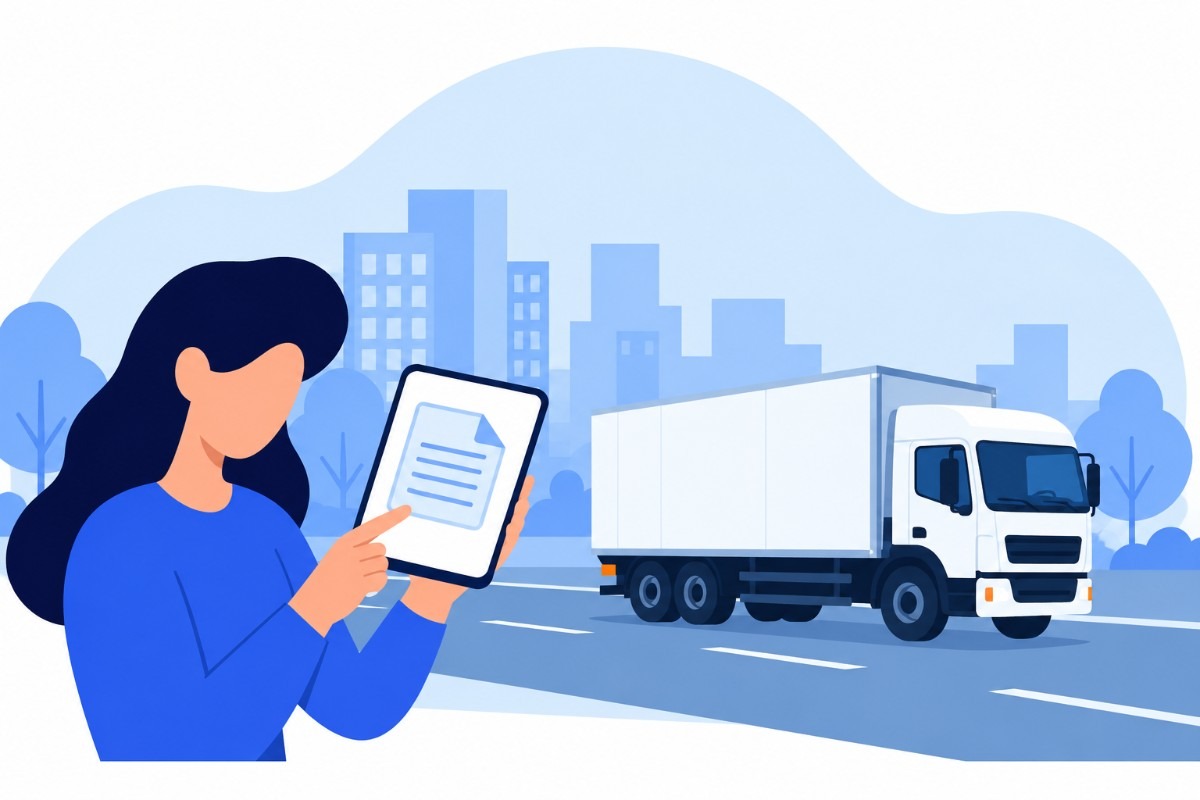
An e-way bill can be extended from 8 hours before expiry to 8 hours after it. Only the current transporter can do it. If no transporter is assigned, the person who generated the bill can.
One important thing to note: Only the transporter carrying the goods can extend Part B validity once the lorry is on the road.
The window is easy to work out. A bill that expires at midnight can be extended from 4:00 PM that day until 8:00 AM the next morning.
The request needs a reason, the consignment's present location, and the distance left to the destination. A breakdown or a road closure is the usual cause.
Goods sometimes change vehicles on the way, as they do in a transhipment. In that case, the transporter updates Part B with the new vehicle and may generate another bill. Ask who watches the bill while the lorry moves, and get the answer in writing at booking.
Who Generates the E-Way Bill for a Part Load Shipment?
The consignor or consignee generates the bill when goods move in their own or hired vehicle. When a transporter carries the goods by road, the transporter generates it. The registered person furnishes Part A, which holds the goods and invoice details, and the transporter updates Part B with the vehicle.
For part load transport, you pass the invoice details at booking. The transporter can then generate Part A once you authorise it.
Check the details the transporter enters against your invoice before dispatch, since a wrong GSTIN or invoice number on Part A is easy to miss. The table sets out the rules in one place.
| Item | Rule |
| Value limit | Consignment value above Rs 50,000 |
| Part A | Furnished by the registered person, consignor or consignee |
| Part B | Updated by the transporter with the vehicle details |
| Validity | One day for every 200 km, each day ending at midnight |
| Extension | 8 hours before to 8 hours after expiry, current transporter only |
| Consolidated bill | A trip sheet for the vehicle, with no validity of its own |
A part load lorry carries many consignments, each with its own bill. The transporter can combine them into a consolidated bill, which works like a trip sheet. Each consignment still has to reach its destination within its own bill's validity.
Example: a lorry leaves Hyderabad with 12 cartons for a dealer in Guntur and 8 cartons for a dealer in Tadepalligudem. Each dealer's consignment has its own bill, with validity set by its own distance. The trip sheet shows both.
E-Way Bill Rules: A Dispatch Checklist
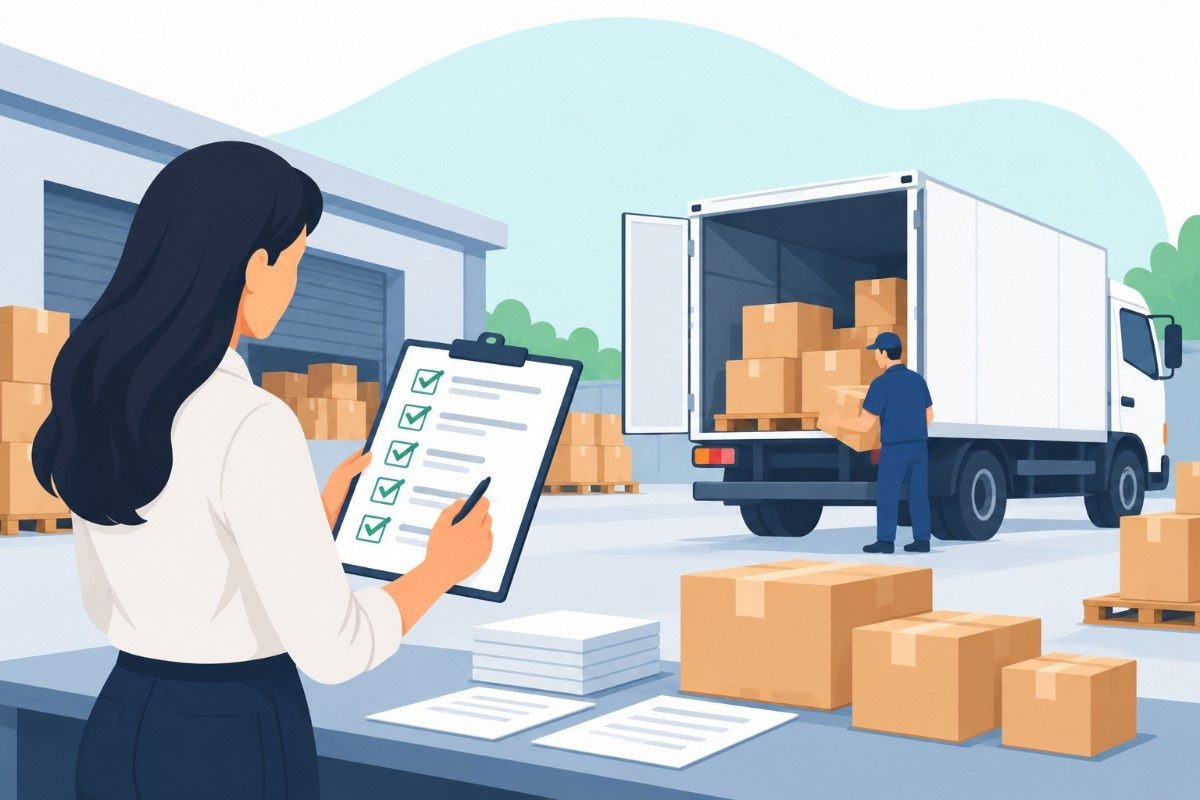
These e-way bill rules come down to five habits at the godown. Each one closes a common reason for a held lorry.
- Compare the consignment value with Rs 50,000 before you book.
- Hand over correct invoice details and your GSTIN at booking.
- Generate or authorise the bill once the dispatch date is fixed.
- Confirm the vehicle number has reached Part B before the lorry leaves.
- Ask who monitors the bill in transit and who requests an extension.
Read the expiry time on the bill before the lorry leaves your godown. A clerk in Auto Nagar, Vijayawada, who notes it on the dispatch sheet, knows when the extension window opens. Without that note, the question reaches you from a checkpoint instead.
Do not mix up the two figures on your paperwork. Invoice value decides whether you need a bill, and chargeable weight decides the freight.
Example: 30 cartons of 50 × 40 × 30 cm at 5 kg each can sit well under the limit in value and still be billed on size. Put the dimensions in our freight calculator or ask the branch for the actual figure.
Keep a copy of the bill with your LR (lorry receipt, the official consignment note) copy. The LR number and the e-way bill number together answer most of what a checkpoint officer or a dealer will ask.
How Lucky Express Handles E-Way Bills on Part Load Freight
We monitor e-way bills daily on every LR and handle extensions in transit. Every consignment gets an LR number at booking, so the bill and the consignment stay linked. The sender and receiver can both track by that number without a login.
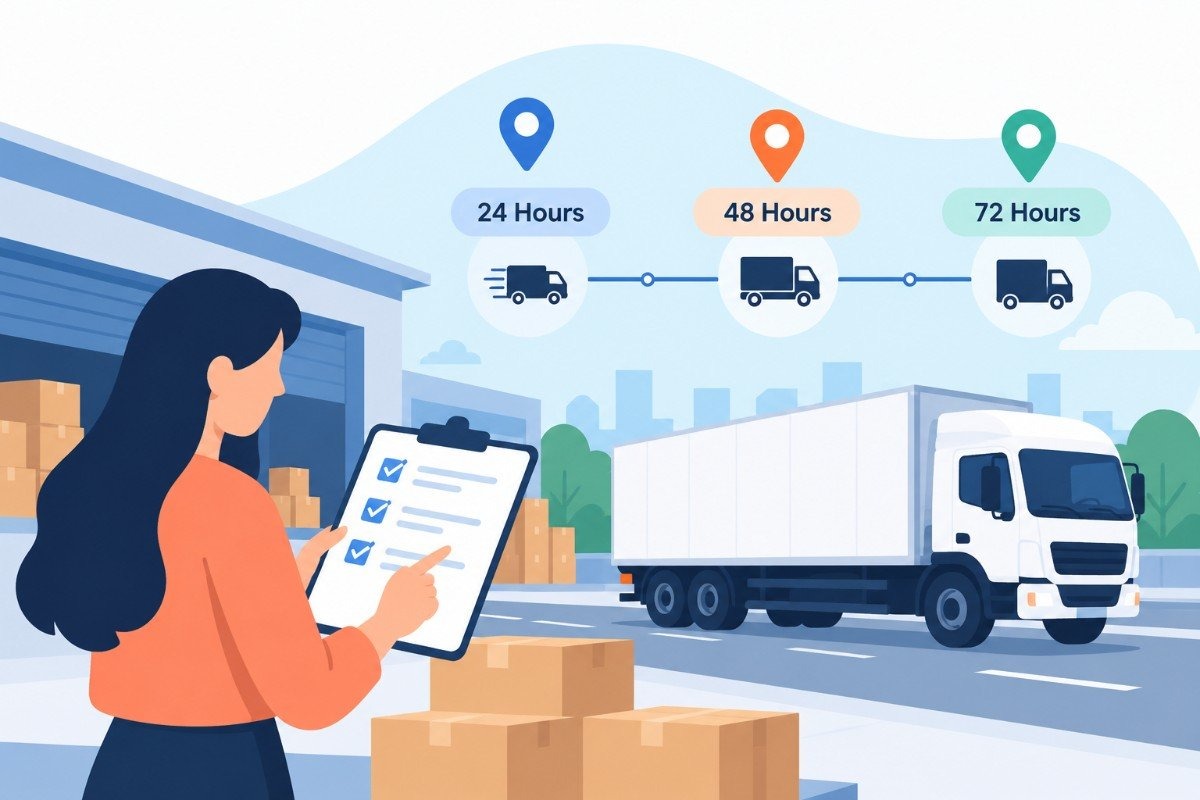
Bookings placed before 4:00 PM qualify for the next 24 hour or 48 hour slot. A Saturday dispatch on a 24 hour lane lands on Monday, so settle the bill before the slot. Tirupati from Vijayawada runs on a 48 hour tier with one transhipment, which is the case where Part B matters most.
Regular shippers can set a pickup plan daily, weekly, bi-weekly or tri-weekly, so bill generation can follow a fixed rhythm. Proof of delivery is taken at the receiver's door, which closes the file on that LR. You can book by phone, at a branch counter, or through our website.
Frequently Asked Questions
1. What is the e-way bill limit?
The e-way bill limit is a consignment value of Rs 50,000. Above that figure, an e-way bill is required, and below it you can still raise one.
2. How is e-way bill validity counted for a 400 km journey?
A 400 km journey gets two days of e-way bill validity, at 200 km a day. Each day ends at midnight.
3. What e-way bill rules apply to a lorry with many consignments?
Every consignment has its own bill and its own expiry. The lorry's consolidated bill is only a trip sheet.
4. What are Part A and Part B, and who generates the e-way bill?
Part A has the goods and invoice details. Part B has the vehicle details, and the transporter fills it in when it carries your goods by road.
5. Can I extend an e-way bill after it expires?
Yes, you can extend it for up to 8 hours after expiry. The current transporter makes the request.
6. Is the e way bill limit the same inside a state?
It can differ, because states set their own rules. Check yours with your tax adviser before you rely on Rs 50,000.
7. Does Lucky Express monitor my e-way bill?
Yes, we monitor your e-way bill daily on every LR. If it needs extending, we handle that in transit.
8. How do I track a Lucky Express consignment?
Enter your LR number on our tracking page to see the status. The sender and receiver can both track, and no login is needed.
Ready to dispatch? Use Ship Now, and the branch will confirm your pickup slot and rate. Already booked? Track your LR with the number from your LR copy.